
OnlyFans free pages remove the subscription barrier and replace it with a pay-per-view model where every message, unlock, and tip is a separate purchase decision. That structure sounds less profitable than a paid page, yet many creators earn more from zero-dollar subscriptions than from fixed monthly pricing. The difference is conversion design: how a browser is moved from a free follow to a first $5 unlock, then to a repeat buyer. BestOnlyFans tracks this funnel across its rankings because the mechanic, not the price tag, decides revenue. This article breaks down the stages, the tactics, and the spending patterns behind that conversion process.
Free does not mean unpaid. It means the payment moment is delayed, repeated, and chosen by the fan rather than charged automatically. Understanding where that payment moment sits in the user journey is the foundation for everything that follows. BestOnlyFans refreshes its rankings every month.
The Free Page Revenue Model Explained
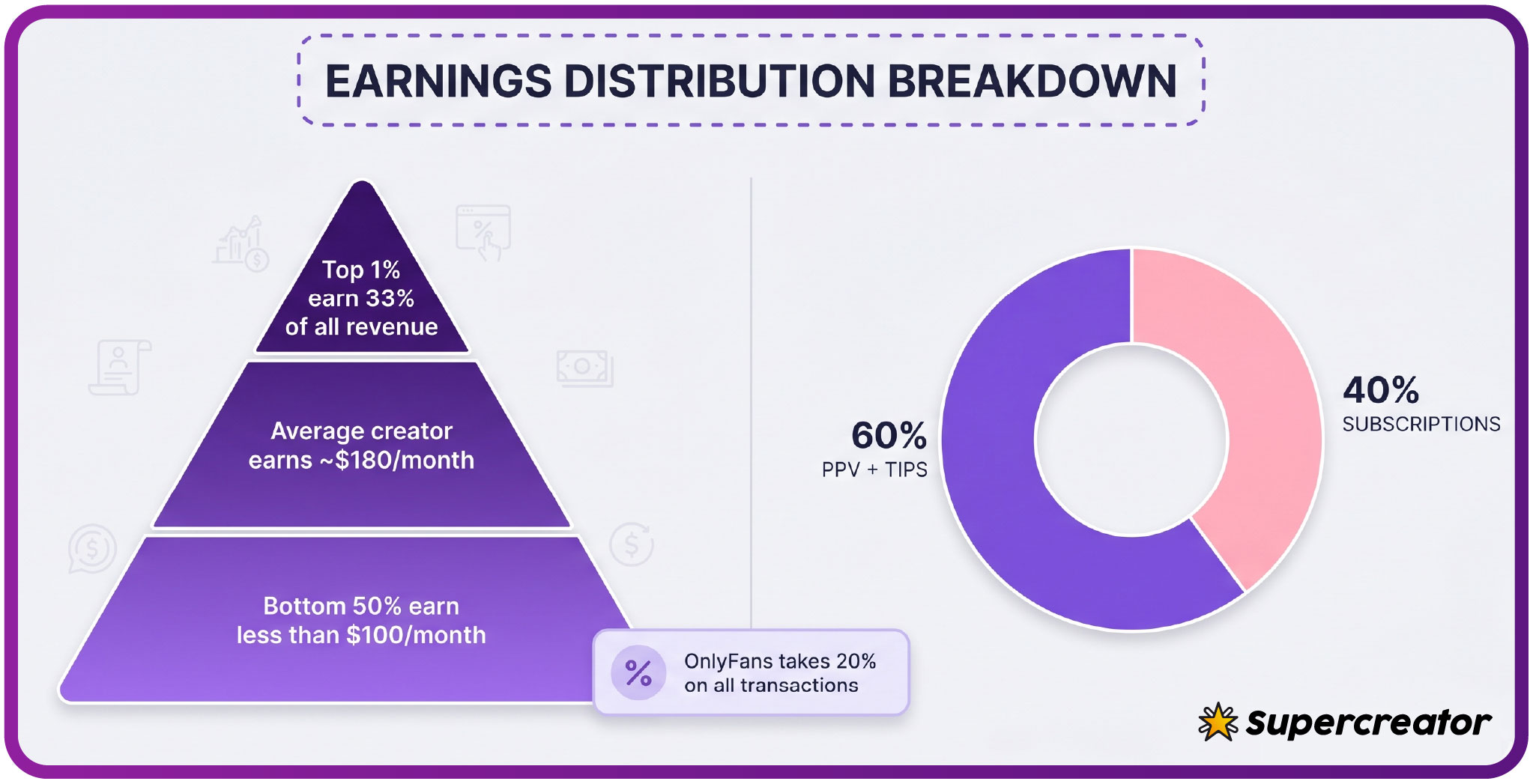
A free page sets its subscription price to $0. There is no monthly charge, so the fan never passes through a checkout screen to gain access. Instead, the creator earns through pay-per-view messages, paid chat, and tips. OnlyFans takes a 20% platform fee on everything, and the creator keeps 80% of each transaction.
That 80/20 split applies identically to paid pages, which is why the free model is not a discount version of the platform. It is a different monetization structure with the same underlying economics. The difference is where the friction sits: a paid page asks for money before access, while a free page asks for money after attention.
- Zero subscription barrier: fans follow without entering payment details at signup.
- 20% platform fee: applied to every PPV unlock, message, and tip.
- 80% creator share: the creator’s cut of all message-based revenue.
- Message-based monetization: locked content delivered through direct messages is the primary income stream.
- Tipping as supplementary income: voluntary payments that reward engagement rather than unlocking specific content.
The practical result is a page that looks empty of commitment at the entry point but generates revenue in small, frequent increments afterward. A fan who would never approve a $9.99 recurring charge may still spend $40 in a month on individual unlocks without noticing the total.
Five Conversion Tactics Used by Free Pages
Conversion on a free page is not passive. It is engineered through a sequence of small prompts that each lowers the psychological cost of the next purchase. These five tactics appear repeatedly across high-performing free pages.
- Teased content previews: a blurred or cropped image in a mass message shows what exists without revealing it, creating a specific gap the fan wants closed.
- Personalized direct message timing: messages sent when a specific fan is historically active see higher open and unlock rates than broadcast blasts.
- Limited-time unlock offers: framing a PPV message as available for a short window adds urgency without changing the price.
- Engagement-based social proof: referencing how many fans unlocked a previous post signals that the content has value.
- Tiered access progression: each unlock leads naturally to a slightly more expensive or more exclusive next offer.
The order matters. Previews create curiosity, timing captures attention, urgency forces a decision, social proof validates it, and progression turns one purchase into a habit. A page that uses only one or two of these tactics usually converts far worse than one that sequences all five.
PPV Message Economics in Practice
PPV messages unlock up to $50, though most fall well below that ceiling. Paid chat commonly runs $3 to $5 per message, and tips can reach $100 but are voluntary rather than transactional. Creators set these prices individually, and the range reflects how differently each piece of content is positioned.
- Content production cost: more elaborate shoots justify higher unlock prices.
- Exclusivity level: content never posted publicly supports a premium.
- Follower size: larger audiences support lower prices at higher volume.
- Seasonal demand: engagement spikes at certain times of year shift pricing upward.
- Competitive positioning: creators compare against similar pages in their niche before setting a number.
Optimization is not about charging the maximum. It is about finding the price where unlock rate multiplied by price produces the highest total. A $50 message unlocked by two fans earns less than a $10 message unlocked by fifteen. Most experienced creators test downward, not upward, when unlock rates stall.
A practical warning: an unlock price is only revenue if the message is opened. Sending high-priced PPV to an inactive segment burns the relationship and lowers future open rates, which is harder to recover than a single missed sale.
Comparing Free vs Paid Page Conversion Rates
The two models convert at different stages of the funnel. Free pages win on entry and lose on immediate revenue. Paid pages do the opposite. The table below shows the general pattern rather than exact figures, since performance varies by niche and audience size.
| Metric | Free Page Pattern | Paid Page Pattern |
|---|---|---|
| Visitor-to-profile view rate | Higher, since no price is shown upfront | Lower, price filters casual visitors early |
| Profile-to-signup conversion | Higher, no payment step at signup | Lower, checkout required before access |
| Signup-to-first-purchase rate | Lower, purchase is optional and delayed | Effectively 100%, since subscription is the purchase |
| Average revenue per active user | Highly variable, driven by individual spend | Predictable and recurring |
BestOnlyFans uses this funnel structure when evaluating pages, because a free page with strong entry conversion but weak first-purchase rates is a different problem than a paid page with weak signup numbers. The fix depends on which stage is leaking.
For fans comparing options, browsing aggregated directories makes the stage-by-stage differences easier to spot. A free only fans pages list groups pages by model and niche, which helps clarify whether a given creator runs on subscriptions, PPV, or a mix of both.
Common Spending Patterns on Free Pages
Without a recurring charge, spending on free pages is entirely discretionary, and that changes behavior. Fans tend to spend in patterns rather than steady amounts.
- Impulse unlocking: a single message at the right moment triggers an immediate purchase.
- Cumulative small purchases: many $3 to $5 unlocks add up without any single large decision.
- Seasonal spikes: spending clusters around holidays and periods of higher free time.
- Tip-based appreciation: fans tip after content they value, independent of any unlock.
- Custom request escalation: personalized requests often carry the highest per-transaction prices.
The cumulative pattern is the one most fans underestimate. Ten unlocks at $4 each is $40, which exceeds every standard paid subscription tier on the platform. Because no single charge feels significant, the total is easy to miss until a statement arrives.
Protecting Your Budget While Browsing Free Pages
Budget control on free pages is entirely self-managed, because the platform does not cap discretionary spending. These five steps give a fan a workable structure without removing access.
- Set a monthly PPV limit: decide a maximum before browsing, and treat it as fixed.
- Disable stored payment methods: removing saved cards adds friction to impulse purchases.
- Review weekly spending: a short weekly check catches drift before it becomes a habit.
- Use a fixed deposit balance: loading a set amount into a payment method limits total exposure.
- Establish a per-message ceiling: decide in advance the highest price worth unlocking.

Account security belongs in the same conversation as budget control. Enabling two-step authentication protects the payment methods attached to the account, and it costs nothing to switch on. Most spending problems on free pages are behavioral, not technical, but a compromised account turns a small problem into a large one.
It also helps to remember that a card verification hold of $0.10 may appear when adding a payment method. It is refunded within days and is not a charge for content.
When Free Pages Become More Expensive Than Paid
The free label describes the subscription, not the total cost. For light users, a free page is genuinely cheaper. For heavy users, it is often the most expensive option on the platform.
| Scenario | Monthly Cost | Equivalent Paid Subscription |
|---|---|---|
| Light user | $0-$5 | Near or below the $4.99 minimum tier |
| Moderate user | $15-$25 | Above most $4.99-$15 paid tiers |
| Heavy user | $40+ | Exceeds every standard paid tier |
Paid subscriptions on the platform range from $4.99 at the minimum to $49.99 at the maximum, with most clustering between $5 and $10. A heavy free-page user at $40 or more is paying above nearly every typical paid tier while receiving no guaranteed content schedule.
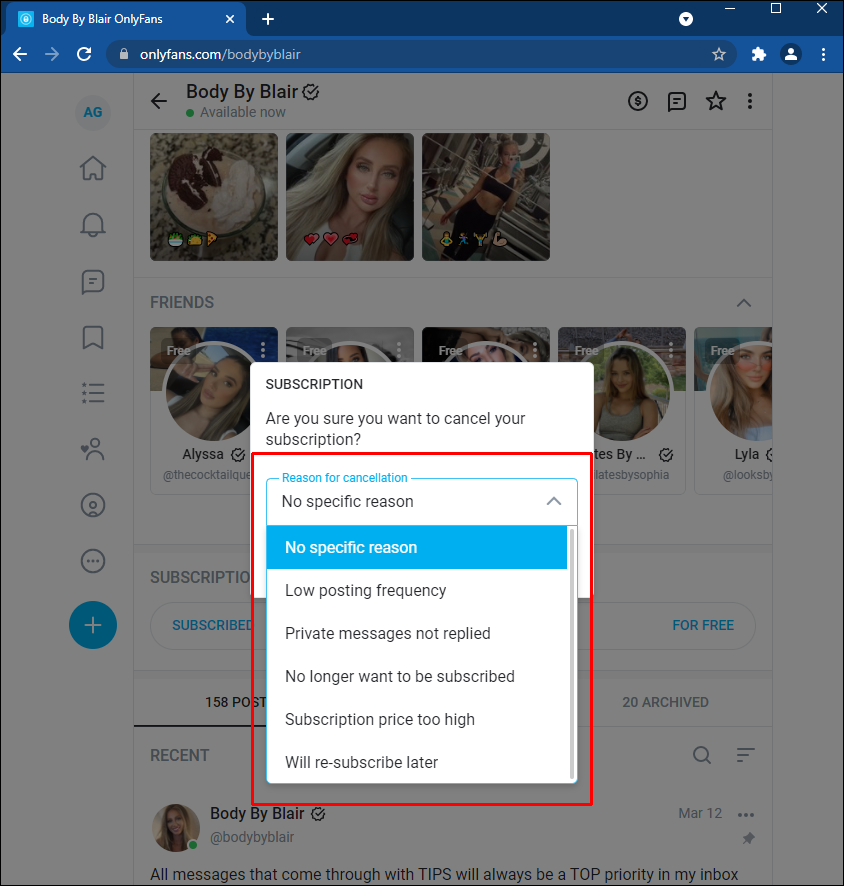
Promotional pricing complicates the comparison further. A first month at $3 is allowed even though $4.99 is the base minimum, because promotional first months can sit below that floor while base prices cannot. Crucially, when a creator raises the base price, auto-renew stops and existing access continues only until the paid period ends. Fans who rely on promotional rates should expect to re-evaluate at each renewal.
The practical takeaway is straightforward. If monthly spend stays under $5, a free page is the better deal. If it climbs past $15, a paid subscription at a fixed rate usually delivers more content for less money. The break-even point sits somewhere between those two numbers for most users.
FAQ
How do free OnlyFans pages make money without subscription fees?
They earn through pay-per-view messages, paid chat, and tips. OnlyFans applies a 20% fee to each transaction and the creator keeps 80%. Because there is no subscription charge, all revenue depends on fans choosing to unlock content or send payments individually.
What is the typical cost of PPV messages on free pages?
Paid chat commonly runs $3 to $5 per message, while PPV unlocks can go up to $50 depending on the content. The price is set by the creator, so it varies widely between pages and even between messages on the same page.
Can following multiple free pages cost more than one paid subscription?
Yes. Ten unlocks at $4 across several pages totals $40, which is above nearly every standard paid tier. The risk grows with the number of pages followed, since each one sends its own PPV messages.
How does OnlyFans handle payments on free pages?
Payments are processed per transaction rather than as a recurring charge. Adding a card may trigger a $0.10 verification hold that is refunded within days. The platform takes its 20% cut at the point of each payment.